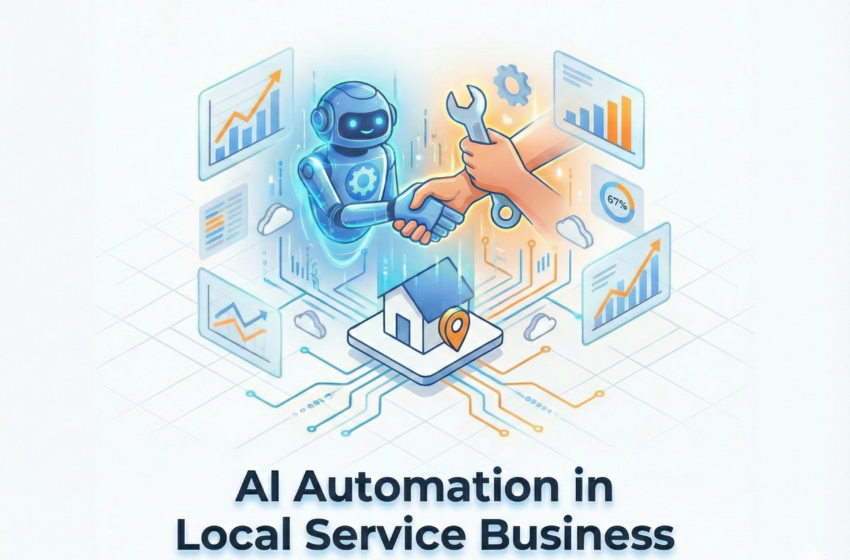
Artificial Intelligence (AI) is completely changing how small businesses, from plumbers to lawyers.
For a long time, digital marketing agencies tried to sell “potential.” They promised things like better search rankings or more website traffic. However, new data shows that this old way of selling isn’t working well anymore.
Business owners are becoming skeptical of technology, and there is too much competition.
New sales method called the “Instant Pain Point Method.” Instead of giving a long sales pitch about features, this method focuses on letting the business owner experience the results first.
The main idea is simple: local business owners don’t care how AI actually works. They only care about fixing their daily problems. Specifically, they want to fix the “leaky bucket”… the money they lose when they miss phone calls or fail to book appointments.
Here is how the strategy works:
- The Setup: The agency sets up a “Smart Website” that uses AI voice agents and chatbots to talk to customers automatically.
- The Trial: They let the business use this system for free (try-before-you-buy).
- The Psychology: When the trial ends, the agency says they will “turn off the electricity” (stop the automated money).
Because the business owner doesn’t want to lose the new revenue they just got, they are much more likely to sign a long-term contract. This is based on a psychological concept called loss aversion. This document explains exactly how this method works, including the psychology, the technology, and the step-by-step process to make it successful.
1. The Communication Problem in Local Businesses
1.1 How Local Services Really Work
To understand why this new sales method works, we first need to look at the daily life of a local business owner. Unlike big companies with large sales teams, local service providers like plumbers, electricians, or landscapers are usually short on time. Often, the person doing the actual work is the same person who has to answer the phone.
This creates a major problem. A contractor fixing a sink or a dentist working on a patient cannot answer a ringing phone. History shows that these calls usually go to voicemail, but people today rarely leave voicemails. Think of it this way: leaving a voicemail in 2025 is like walking into a store, seeing nobody at the counter, leaving a sticky note, and walking out. In today’s fast-paced world, customers don’t leave notes… they simply click on the next business listed on Google.
1.2 Why the Old Way of Selling Failed
For the last 15 years, digital agencies tried to sell their services by teaching business owners. They tried to explain complicated things like SEO (Search Engine Optimization), algorithms, or web design.
However, new Artificial Intelligence (AI) is too complex to explain easily. When a beginner salesperson tries to explain technical terms like “Large Language Models” or “neural voice” to a contractor, it just creates confusion. The business owner doesn’t care how the technology works, they only care if it makes them money. Research shows that salespeople fail when they focus too much on the AI itself. The complicated technology makes owners skeptical rather than excited.
1.3 Changing from a “Luxury” to a “Must-Have”
The “Instant Pain Point Method” fixes this by changing how AI is presented. It stops treating AI like a fancy marketing add-on (a luxury) and starts treating it like a basic utility (a necessity).
Think about electricity. You don’t buy electricity because you understand the physics of how electrons flow. You buy it because your business cannot run without it. This method tries to make AI Voice Agents and Smart Websites as essential as electricity. The goal is to weave the automation so deeply into the business during the free trial that removing it would cause a crisis. This changes the negotiation. The salesperson isn’t just trying to sell a contract… they become the provider of a critical tool that the business owner is afraid to lose.
2. The Psychology of Feeling Loss
2.1 Why We Hate Losing Things (Loss Aversion)
Scientists who study how people make decisions have found a clear rule: the pain of losing something is about twice as strong as the happiness of gaining something. This is called Loss Aversion, and it is the main engine behind the “Instant Pain Point” method.
Traditional sales pitches focus on what you might gain. A salesperson says, “If you hire us, you might get 20 more customers.” This is risky because it’s just a promise. This new method is different. It focuses on what you currently have. By giving the business the service for free (a trial), the owner starts to feel like they already own the results.
When the trial ends, the conversation changes. It isn’t, “Do you want to buy this?” It becomes, “Do you want to lose the system that just booked you 15 jobs?” The salesperson says, “I’m going to turn the system off… make sure you are ready to answer the phones yourself again.” This scares the owner. They don’t want to go back to the chaos of missed calls, so they buy the service to stop that from happening.
2.2 Valuing What We Own
The Endowment Effect is a fancy term that means we value things more simply because we own them. In software sales, a 14-day trial makes the “Smart Website” feel like it belongs to the business owner.
The method uses two steps:
- Step One: Show that the system works to make them want it.
- Step Two: Give them a free trial so they feel like they own it.
The salesperson sets low expectations (“I’ll just turn it on and we’ll see”), but delivers high results (real appointments). The client isn’t thinking about buying anything yet. They are just accepting a free gift. Once the trial is over, the monthly price ($297–$497) seems very small compared to the pain of losing the helper they now rely on.
2.3 Trading Favors and Setting Prices
This method also uses a social rule called Reciprocity. This is the feeling that if someone does you a favor, you should do one back.
It works like this:
- The Anchor: The salesperson says, “Normally, it costs $1,500 just to set this up.”
- The Favor: “But, I will waive that fee and give you a free trial. All I ask for is a simple review/testimonial.”
This does two things.
First, it makes the service look expensive and valuable ($1,500), so the monthly fee looks cheap later.
Second, by “gifting” $1,500 worth of work, the business owner feels grateful because they feel they have already received a big favor, and they are much more likely to say “yes” to the trial and eventually pay for the service.
3. How the “Smart Website” is Built
The “Smart Website” Component Breakdown
| Component | Technology | Function | Benefit |
| Voice Agent | Retell/ElevenLabs/GHL | Answers calls, books appointments | 24/7 Coverage, No Missed Revenue |
| Chatbot | Conversation AI | Captures SMS/Web leads | Instant Engagement, Context Retention |
| Calendar | Calendar | Syncs with Agent for Booking | Real-time availability, Double-booking prevention |
| Automation | Workflows | Follow-up SMS, Reviews | Nurtures leads post-call |
3.1 The Main Idea A “Smart Website” is not just a digital pamphlet for people to read. It is an active worker for the business. In the world of Vibe Coding, a Smart Website is a landing page that uses special tools to talk to visitors and turn them into customers without a human needing to help.
Research shows this system has three main parts:
- Voice AI Agents: Robots that can answer phone calls and talk like humans.
- Conversational Chatbots: Robots that handle text messages and website chats.
- Smart Forms and Calendars: The tools that actually book the appointment on a schedule.
3.2 Voice AI: The “James” Phenomenon. The biggest change in this strategy is Voice AI. In the past, you had to press buttons (“Press 1 for Sales”). Today, modern Voice AI uses advanced computer brains (LLMs) to understand what you want and speak back in a voice that sounds human.
3.2.1 Who is “James“? The virtual AI character’s name that will be talking on the call.
- His Voice: “James” sounds like a calm, middle-aged American man. He sounds like a professional office manager, which is perfect for businesses like plumbers or air conditioning repair.
- Where he comes from: “James” is a digital voice model found in software like ElevenLabs. Because so many people use this pre-made voice, it makes it easy for beginners to set up their system without having to build a voice from scratch.
3.2.2 Speed and Realism For the “Show, Don’t Convince” method to work, the AI has to sound real enough to fool the customer, or at least be helpful.
- Latency (Lag): This is the delay between when you speak and when the AI answers. If the delay is too long, it feels fake. The best systems answer in less than a second (800ms) to keep the conversation flowing.
- Interruptions: A human stops talking if you interrupt them. The AI must do this too (called “barge-in”). If the customer starts speaking, the AI must stop immediately. This makes the call feel natural.
3.3 Texting and Memory The system also uses a chatbot for text messages (SMS) or website chat.
- Having a Goal: This isn’t a chatbot that just says “hello.” It has a specific mission: to book an appointment.
- Memory (Context): Good AI remembers the conversation. If a customer says, “I have a leak,” and later asks, “Can you fix it?”, the AI knows that “it” refers to the leak. This memory allows the AI to actually be helpful instead of annoying.
4. The Money Logic: Why Speed Matters
To win the negotiation, the salesperson needs solid proof. They use data called “Speed to Lead” to show the business owner exactly why they are losing money.
Comparative Analysis of Lead Response Times
| Response Time | Qualification Probability | Conversion Impact |
| 1 Minute | High | +391% Conversion Rate |
| 5 Minutes | Baseline | 100x vs 30 Mins |
| 30 Minutes | -21x Less Effective | Significant Drop |
| 42 Hours (Avg) | Near Zero | Lead Lost to Competitor |
4.1 The “Platinum Minute” and the 5-Minute Rule The speed of a reply changes everything. The research shows clear facts:
- The 5-Minute Rule: If you contact a customer within 5 minutes, you are 100 times more likely to succeed than if you wait 30 minutes.
- The “Platinum Minute”: Answering in the very first minute can boost your success rate by nearly 400%.
- Being First: 78% of customers buy from the business that answers first.
These numbers are the main weapon for the salesperson. When a business owner says, “I’ll call them back later,” the data proves that “later” basically means “never.”
4.2 The Cost of Ignoring Customers Most local businesses have what experts call a “Leaky Bucket.” They spend a lot of money filling the bucket (buying ads on Google), but the bucket has holes in the bottom (missed calls).
- The Reality: The average business takes 42 hours to reply to a lead. Even worse, 51% of leads are never contacted at all.
- Voicemail is Dead: As mentioned before, voicemail doesn’t work anymore. 82% of customers expect an answer within 10 minutes. If they get voicemail, they don’t leave a message; they hang up and call a competitor.
4.3 Showing the Return on Investment (ROI) The “Instant Pain Point” sales pitch uses simple math to convince the owner. Here is the calculation they use:
- Job Value: Imagine an average plumbing job pays $450.
- The Loss: If the business misses 10 calls a week, that is a lot of lost money. Over a year, that could be $70,200 in lost revenue.
- The Solution: The AI system costs about $6,000 a year ($497/month).
- The Logic: The salesperson argues: “If this system saves you just one job a month, it pays for itself. Everything else you make is pure profit.”
By comparing the cheap cost of the AI to the huge cost of missed calls, the decision to buy becomes obvious.
5. The Step-by-Step Playbook
This section explains exactly how to run this strategy. It combines the “Instant Pain Point” idea with the “Smart Website” demo into a simple, repeatable plan.
5.1 Step 1: Finding the Right Customer The method says you should not make annoying “cold calls.” Instead, use a smarter approach.
- Where to look: Find local businesses on Google Maps that are paying for ads. This proves they want new customers.
- The Check: Call them. If they don’t answer, they are the perfect target.
- The Pitch: Call them back and say: “I called you, but got voicemail. In 2024, that is like a customer walking into your store and finding an empty counter. I have a ‘digital receptionist’ that sits at that counter 24/7. Can I show you how it works?”
5.2 Step 2: The “Show, Don’t Convince” Demo This is the most important moment. Stop talking about “AI” and start showing results.
- The Setup: Tell the business owner to call a specific phone number and put it on speakerphone.
- The Experience: They call. The AI agent, “Aaron,” answers professionally.
- The Action: The owner acts like a customer (e.g., “I have a burst pipe”). The AI handles the call and books a time.
- The Reveal: The owner watches their own computer screen and sees the appointment pop up on the calendar instantly.
- The Result: The owner stops being scared of technology and starts seeing dollar signs. They realize, “That could have been a real customer paying me money.”
5.3 Step 3: The “Special Deal” (Price Anchor) Once the owner wants the system, the salesperson makes an offer that is hard to refuse.
- The High Price (The Anchor): “Normally, I charge a $1,500 setup fee to build this, plus $497 a month.”
- The Favor: “But, I need a success story in this city. If you promise to give me a testimonial review later, I will waive the $1,500 fee completely.”
- The Free Trial: “I’ll also give you a 14-day free trial. You don’t pay me anything yet. Let’s turn it on and see if it makes you money.” Because the owner feels like they are getting a $1,500 gift for free, they almost always say yes.
5.4 Step 4: The Test Run During the 14-day trial, the goal is to make the business depend on the system.
- Integration: The business forwards their missed calls to the AI number.
- Monitoring: The salesperson watches the system. Every appointment booked is a “win.”
- Reporting: send weekly updates: “Hey! Just so you know, the AI handled 12 calls this weekend while you were sleeping. That is 3 booked jobs waiting for you.”
5.5 Step 5: The “Turn Off” Negotiation When the trial ends, the salesperson uses the “Electricity” strategy.
- The Review: Show them the math. “Over the last two weeks, the system booked 10 jobs. That is about $4,500 in new revenue.”
- The Threat: “The trial ends tomorrow. I am going to turn the system off. All those missed calls will go back to voicemail, so make sure you are ready to answer the phones 24/7 again.”
- The Feeling: The owner panics. They imagine losing those future jobs and the money that comes with them.
- The Close: “If you want to keep the ‘electricity’ on, it’s just the monthly subscription ($497). Should we keep it running?”
- The Outcome: The owner usually begs to keep it on. The salesperson has total control.
6. How to Build It Fast (The Technical Stuff)
Research emphasizes that this method is “beginner-friendly.”
6.1 Installing the “Snapshot”
- Action: The user logs into the software and imports the “AI Smart Website” Snapshot. Think of a Snapshot like a “Save Game” file that has everything completed for you.
- Result: This instantly fills the account with all the necessary websites, automation rules, and settings.
6.2 Setting Up the Voice AI
- Picking the Agent: In the AI settings, you simply select the “Aaron” template. He is already set up with a “System Prompt” (instructions on how to behave) and the right voice settings.
- The Phone Number: You buy a local phone number directly inside the software (using Twilio or LC Phone). This is very cheap—about $1.15 per month.
- Connecting: You link the new phone number to the AI robot.
- Testing: The research says: “Test the agents by actually talking to them before sharing.” You must call the number yourself, pretend to be a customer, and make sure the robot answers quickly and correctly.
6.3 Customizing the Look
- Loading the Template: The Snapshot usually comes looking like a Plumber or Handyman website.
- No Web Domain Needed: For the sales demo, you do not need to buy a real website name (like joesplumbing.com). You can just use the software’s “preview link.” The client cares about how it works, not the URL at the top.
- Quick Changes: If you want to switch from pitching a Plumber to pitching a Dentist, it is very fast:
- Swap Images: Change the background pictures (e.g., replace pipes with smiling teeth) using the built-in image library.
- Update Info: Change the “Business Name” in the settings.
- Update the Brain: Change the AI’s instructions from “You are a plumbing assistant” to “You are a dental assistant.”
7. Market Analysis: Niche Suitability and Scalability
7.1 High-Pain Niches
The “Instant Pain Point” method is most effective in industries where a missed call equals a missed emergency.
- Plumbers/HVAC: If a pipe is bursting, the customer needs help now. If the phone isn’t answered, they call the next plumber. The AI’s ability to answer 24/7 is a massive revenue driver.
- Dentists: Emergency dental work is high-value. Capturing these leads instantly justifies the software cost.
- Lawyers (DUI/Personal Injury): These are distress purchases. Speed-to-lead is the single biggest factor in securing the client.
7.2 Service-as-Software (SaS)
This model represents the evolution of the agency. The client is not buying “software” (SaaS) that they have to learn to use. They are buying a “service” (a receptionist) that happens to be executed by software. This “Service-as-Software” model allows the agency to charge service-level retainers ($500+) rather than software-level subscriptions ($97), significantly increasing margin.
7.3 Scalability for the Agency
Because the fulfillment is automated, the agency can scale without hiring human staff. One “Smart Website” snapshot can be deployed to 100 plumbers with minimal customization. The “Aaron” agent works for all of them simultaneously, never gets sick, and never asks for a raise. This creates a highly scalable, high-margin business model for the reseller.
8. Ethical and Operational Considerations
8.1 The “Uncanny Valley” and Disclosure
While the goal is to make the AI sound human, ethical guidelines (and increasingly, legislation) suggest disclosing the nature of the agent. The “Aaron” agent is often programmed to say, “I’m the AI assistant for” if asked. This transparency actually builds trust, as customers are often impressed by the technology rather than feeling deceived.
8.2 Managing Hallucinations
LLMs can occasionally “hallucinate” or promise things they shouldn’t.
- Guardrails: The “System Prompt” must include strict guardrails: “Do not quote prices. Do not promise specific arrival times. Only book the appointment window.”
- Human Oversight: During the trial, the strategist should review call recordings (transcripts) to ensure the AI is behaving correctly. GHL allows for recording and reviewing all calls.
Data Appendix: Key Performance Indicators (KPIs) for the Strategy
| Metric | Traditional Sales Model | Instant Pain Point Model |
| Sales Cycle Length | 3-6 Weeks | 1-2 Calls (Demo + Trial Start) |
| Close Rate | 10-20% | 40-60% (Post-Trial) |
| Client Retention | Low (Results take months) | High (Results are instant) |
| Perceived Value | “Marketing Expense” | “Operational Utility” |
| Lead Qualification | Manual (Slow) | Instant (AI-Driven) |